They bragged, they threatened, and they conquered.
In the span of a month, WikiLeaks, a once-obscure community of busy-bodies dedicated to unearthing the most secretive of information for the public's consumption, made good on their threat to release on the web the biggest information leak in history.
The world woke up one morning to find hundreds of thousands of US military and diplomatic cables accessible with just a click away. Even as armies of analysts and journalists sieved through the pile for nuggets of gold - some entertaining, some shocking, most of them boring enough to warrant a yawn -, the damage was only just beginning.
Embarrassing revelations were revealed by many of the world's press, implicating hundreds of diplomats and officials (including Singapore) on thoughts that should stay private. It is not clear how these revelations could affect certain sensitive bilateral ties, but the coming months promise more leaks and more bad news.
And the world lapped it all up. While digesting press reports on the leaks, they also saw the world's superpower - led by its mighty Justice and State departments - doing almost everything they could to stop the leaks, and failing miserably at it.
It is almost amazing to see how a handful of geeks and self-proclaimed analysts can hold the US hostage to its actions, embarrass it dearly, and yet live to fight another day. The last time I checked, Wikileaks have shifted their domain to another server in the ongoing cat-and-mouse game with the authorities.
Sure, the Wikileak reports make for interesting meal-time discussions and before-bed-time laughs. But the deeper question remains: How is Wikileaks potentially benefitting the world by releasing all these cables? How is the average Joe's quality of life going to improve?
By putting the reputation (and even the lives) of thousands at risk, all in the name of the public's right to know, Wikileaks has exposed itself as an irresponsible mischief-maker, perhaps hungry only for the fame and fortune. Wikileaks founder Julian Assange just might get his million-dollar book deal but looking at the list of potential charges against him, he would have to write his book behind bars.
This whole episode however serves to highlight the disproportionate power that organisations or even individuals can have over whole governments. The web has also proven to be one of the cornerstones of asymmetric warfare in the 21st Century, and the potential for more mischief is almost unlimited.
But this is another stark reminder that Governments can't win all the time, and sometimes the best way out is to manage a defeat honourably.
Showing posts with label Politics\Government. Show all posts
Showing posts with label Politics\Government. Show all posts
Sunday, December 12, 2010

Saturday, May 8, 2010
A tale of spies, money and power
I just completed reading Alex Goldfarb's Death of a Dissident. It chronicles the life and series of events leading to the dramatic poisoning of Alexander 'Sasha' Litvinenko, an ex-KGB Colonel who defected to the UK and sought asylum as part of the growing number of Russian emigres.
Sasha died of radioactive poisoning, the first such case of a "nuclear terrorist attack", when his food was allegedly tainted by a FSB (the new KGB in post-Soviet Russia) operative under the directives of Moscow. His death led to a public health scare when the British authorities had to retrace Sasha's route after the alleged poisoning, and sealed off large swathes of London pending fear of the spread of radioactive toxins to the public.

What is more controversial is that the book provided a number of insights into the murkey world of Russian politics, the modus operandi of the KGB and FSB, the personalities in Sasha's life, and the extent of persecution of dissidents pursued by the Russian state under former President Putin (who is now the current Prime Minister under President Dimitri Medvedev).
1. Admidst the chaos of the post-Soviet collapse, the cash-strapped KGB and other Russian intelligence services "sold" their services to the highest bidders - mostly oligarchs and bureaucrats who enriched themselves from the privatisation of state property - who engaged in high-level assasinations and intense tuft wars. This was the start of the erosion of the professionalism of the intelligence services and their unquestioned loyalty to their political masters.
2. Reformers and oligarchs (who had the financial backing), Communists (who retained popular support) and Conservatives (who had the support of the military and intelligence services) competed with each other for influence over Yeltsin, Russia's first post-Soviet President who was an avowed democrat and reformer. The battle lines blurred further as the reformers (under the leadership of Chubais, the chief architect of the privatisation programme) and oligarchs clashed over the role of the business community in the political leadership of Russia. They were supported at various times by factions within the Communists and intelligence services.
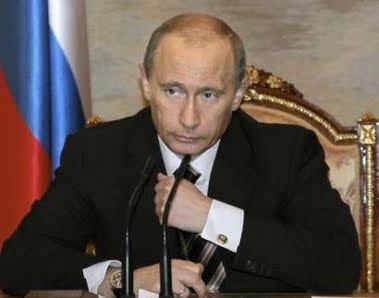
3. Through a series of round robin clashes and the rise and fall of many personalities who briefly warmed the seat of the Prime Minister, Putin emerged as the eventual successor of the ailing Yeltsin who favoured him for his loyalty and democratic tendencies. Putin won the 2000 elections handsomely, backed by oligarchs like Boris Berezovsky who campaigned endlessly for him and supported him with his vast and independent media empire. Boris became Putin's mentor and was convinced that Putin was the right successor to continue Yeltin's mission to democratize Russian politics.
4. However, Boris and the reformers were to be sorely disappointed as Putin turned out to be a hawk. He installed hardliners in his administration, centralised state control over the military, economy and intelligence services, persecuted the oligarchs and alleged opponents of the state, reversed Yeltsin's privatisation programme, and clamped down on independent media in Russia. Threatened by the regime, Boris and Sasha were forced to join the long list of emigres abroad as Putin consolidated his hold over Russia.
5. There were also allegations that the infamous Moscow apartment bombings in 1999 (dubbed Russia's 9'11) that sparked the second Chechen War - which helped cement Putin's popularity - was actually perpetuated by the FSB who wanted to see Chechnya brought into the fold of the old Russian empire. Other allegations included that the 2002 fateful siege of the Moscow theatre by Chechen militants that left almost 150 people dead, was actually planned by the FSB to cultivate a climate of fear and justify continued military involvement in Chechnya despite staggering losses suffered by the Russian military with little end to the war. The state also persecuted and assasinated Duma representatives, journalists and human-rights activitists who opposed the Chechen War.
6. Russian dissidents even accused the world of looking the other way as the Russians committed countless atrocities in Chechnya. For instance, the Bush administration was especially eager to cultivate relations with Putin, seeing in him "an ally who can be trusted", and dismissed the Chechen War as a domestic Russian campaign against "home-grown terrorism". Boris and his dissident counterparts attempted to tell "the truth" about the regime and waged an intense PR and media campaign against Putin. They were resisted by the Kremlin who engaged in their own counter-campaign of misinformation, and attempted unsuccessfully to repatriate Russian emigres whom they accused of subversion and disloyalty.
As the author pointed put, Sasha's death pointed to the extent of Russia's failed democratic experiment since the collapse of the Soviet Union, Putin's zealousness in eliminating his opponents with the domination that the FSB had over the Russian government. More importantly, it provided a glimpse of the intense power struggle behind the scenes of Russian politics, and the type of regime that the world has to deal with for the foreseeable future.
The future path of development in Russia and the accuracy of these insights are best left to readers to decide for themselves. However, one thing is certain: that the book will take you on a journey to see how deep the rabbit-hole really goes.
Wednesday, May 5, 2010
The Eroding Union (EU)?
When it came down to a test of wills, the Europeans blinked hard and fast - especially when their interests are at stake.
Few seriously expected the Germans to resist the call to bail-out Greece for long. Even though Chancellor Angela Merkel 's fragile coalition faced intense opposition from the electorate against sending billions of taxpayers dollars to Greece without proper guarantees of repayment, the value of the Euro was sliding fast.
The pan-European currency slipped to $1.321 on Monday, down from $1.331 on Friday and $1.512 on Dec 3, with prospects of further depreciation as investors shorted the Euro.
Hence, Germany's cabinet agreed on Monday to lend Greece 22.4 billion euros over three years. The IMF agreed to lend Greece 110 billion euros, tied to austerity pledges that could bring Greece's annual deficit below 3% from 13.6% in 2009.
Wither the Euro zone?
While it is true that no one could predict this crisis from happening because many EU countries were running high public debts and no one expected Greece to cook its books for years, there were inherent issues tying the different European economies to a single currency from the start.
Firstly, the monetary integration of the economies of the Euro countries meant that they will also be at risk so long as one country risks defaulting on its debt obligations, which will lead to speculative attacks on the Euro and send it into a tailspin since its debt is denominated in Euros, as the Greek crisis showed. A monetary union like the Euro zone is only as strong as its weakest link.
Secondly, having a single currency limits the scope of policy actions in a debt crisis. The automatic response for countries facing such a situation would be to depreciate their currencies to export their way out and meet their debt obligations. As a member of the Euro zone, Greece did not have such tools at its disposal and this limited its response, except for fiscal and monetary policies.
Thirdly, there is no powerful central bank to act as a lender of the last resort. The European Central Bank (ECB) remains a stump since the real authority to lend credit lies with Paris and Berlin, while the EU has not set aside any reserves to deal with a fiscal crisis of this magnitude. This meant that Greece had to sit out for weeks and wait to be bailed-out since their ratings were cut in December, while European central bankers and politicians, tied to electorate concerns, dragged their feet on this issue.
Finally, the historically high value of the Euro (dubbed the 'French & German currency' given their economic domination of the EU) has helped make poorer countries like Greece, Spain, Italy and Portugal economically uncompetitive. While imports are cheaper, their exports are more expensive, with traditional manufacturing industries being eroded by competition from low-cost alternatives from countries like China.
Critics of the Euro zone, like the UK, have high-lighted these weaknesses for years. Countries considering joining the Euro zone might think twice ahead.
However, to be fair, the Euro has proven to be a balk ward of stability against currency manipulation and fluctuation, facilitating trade and giving the EU much economic stability for years.
But as the Greek crisis has shown, a system that allows the EU to prosper in good times may not have the same capacity to do so during the bad times.
Going beyond the Greek crisis
While EU pundits have lauded the bailout as a "timely and effective" response to a "modern Greek tragedy", the EU indeed has its work cut out for it. There has been calls to strengthen the ECB as a mechanism to provide fast credit in future crises.
Meanwhile, brickbats have been thrown at international rating agencies like S&P for "irresponsible downgrading" of Greece's ratings, with people like Michel Barnier, the EU internal market commissioner, and Christine Lagarde, the French Finance Minister advocating the establishing of a "separate and independent" European central rating agency.
However, that misses the whole point of this crisis.
For years, Greece has embraced the Eurocentric model of welfare-states, spending billions on social assistance support schemes, and allowing itself to be at the mercy of its vocal, vote-rich constituents like the trade unions at the expense of responsible fiscal policy. The week-long protests by workers, teachers and civil servants however showed popular anger among ordinary Greeks who feel they are made to pay the price of their country's crisis while tax evasion and corruption go unpunished.
In any case, while Greece revamps its tax and fiscal policies in the coming months, it has to rethink the merits of its welfare state policies together with many countries in the Euro zone that has for years sheltered its workers with 35-hr work days, tax breaks, lavish expenditure and other benefits, which is inhibiting their economic competitiveness.
I remember an instance when I brought a visiting French professor on an SMU campus tour. The conversation touched on the working culture in Singapore where she was adamant that working anything more than 45 hours a week was simply "inhumane" and "crazy". She went on to harp on the superior quality of life in the EU and the high standards of living of its people.
This example showed that once a mentality is fixed, it is difficult to change, especially when they have introduced a policy for years and people have come to accept it as their right (or what political scientists call "path dependency").
But that path leads to a bleak future for the EU in a world where millions of young Chinese and Indians are upwardly mobile and eager to compete for jobs and opportunities. Now, it remains to be seen if the EU can wake up from its dream of continental bliss and revamp their economies - medicine that is bitter but essential for recovery.
Tuesday, February 16, 2010
A language crisis or something else?
House-visiting at my relatives during Chinese New Year can yield a harvest (i.e. ang paos and goodies) and also timely insights.
I am increasingly frustrated at my inability to communicate effectively with my Mandarin and dialect-speaking relatives (mainly the older folks from my Mum's side). Yes, some of my younger cousins can converse in English but prefer to speak in Mandarin, having been raised in a Chinese-speaking family environment.
It can't be a matter of language or some generational gap too as my cousin nicely pointed out today that my command of Mandarin is fine (which I strongly disagree) while I have no issues conversing with my English-speaking older relatives.
Methinks it is something else.
Having been raised in an upper middle-class family, taught in an almost exclusively all-English environment at home (although I speak to my Mum in a mixture of English and Mandarin) and school (minus the Mandarin classes), and exposed to ideas and principles like any member of the Western-educated intelligentsia (a general labeling that includes university students in Singapore) are, I feel continents apart from some of my folks.
There seems to be a chasm of thinking that divides the English and Chinese-speaking population, one based on family values and different language backgrounds that determine the type of literature one is exposed to, thereby shaping one's view of life and the world.
But the truth is that Mandarin is still the dominant language of the heartlands (which constitutes the majority of Chinese Singaporeans) while English, which is the language of government, business and education, constitutes only a minority of the population.
Having been trained almost exclusively in the latter, I believe I speak for most English-speaking Singaporeans who may feel this sense of alienation from the majority of the Chinese population who speak primarily Mandarin and dialects.
We are always so fixated about divisions along racial, religious and class lines. How about examining the divisions created by the family-language backgrounds that we all hail from?
I am increasingly frustrated at my inability to communicate effectively with my Mandarin and dialect-speaking relatives (mainly the older folks from my Mum's side). Yes, some of my younger cousins can converse in English but prefer to speak in Mandarin, having been raised in a Chinese-speaking family environment.
It can't be a matter of language or some generational gap too as my cousin nicely pointed out today that my command of Mandarin is fine (which I strongly disagree) while I have no issues conversing with my English-speaking older relatives.
Methinks it is something else.
Having been raised in an upper middle-class family, taught in an almost exclusively all-English environment at home (although I speak to my Mum in a mixture of English and Mandarin) and school (minus the Mandarin classes), and exposed to ideas and principles like any member of the Western-educated intelligentsia (a general labeling that includes university students in Singapore) are, I feel continents apart from some of my folks.
There seems to be a chasm of thinking that divides the English and Chinese-speaking population, one based on family values and different language backgrounds that determine the type of literature one is exposed to, thereby shaping one's view of life and the world.
But the truth is that Mandarin is still the dominant language of the heartlands (which constitutes the majority of Chinese Singaporeans) while English, which is the language of government, business and education, constitutes only a minority of the population.
Having been trained almost exclusively in the latter, I believe I speak for most English-speaking Singaporeans who may feel this sense of alienation from the majority of the Chinese population who speak primarily Mandarin and dialects.
We are always so fixated about divisions along racial, religious and class lines. How about examining the divisions created by the family-language backgrounds that we all hail from?
Sunday, January 10, 2010
What, they firebomb churches in Malaysia?
Yup, that's what my friend exclaimed in response to the latest fiasco coming from our northern neighbour.
As exaggerated as it sounds, it's probably reflective of the sentiments that many people now have of Malaysia. This is due to a surge in ethnic and religious tension fanned by the controversial High Court ruling overturning a ban that now allows the Catholic Church to use the word "Allah" in its publications. The entire episode has been blown out of proportion
The fact that the media has had a field day publicising this issue and splashing angry messages on the front pages of newspapers does not help. Muslim pressure groups have publicly demonstrated against the ruling even after the firebombing incidents - an implicit defiance of the sensitivities of the Christians.
I'm not a theologian and it does not concern me whether the term "Allah" predates Islam or should be exclusively used by Muslims despite the Catholic Church in Malaysia having used the term widely in their publications for decades.
The perpetrators of the firebombing incidents have crossed the line that most Muslims in Malaysia will never want (or dare) to cross. However, a response to the High Court's ruling speaks more of a society that harbours deep divisions that run along ethnic and religious lines, against PM Najib's vision of "1Malaysia".
This latest attack will reinforce the fears of the minorities who already perceive the attack on the churches as an attack on the minorities - who else are predominately (and officially) Christians in Malaysia except the Chinese and some Indians?
Already, there has been widespread accusations of institutional discrimination against the minority religions. The authorities have been slow to issue permits to the construction of new churches, and religious court cases such as the highly publicised hearings to allow official recognition of conversion of Muslims to Christianity always favour the Muslims. The Government appealing to the High Court to overturn its ruling and the authorities seizing copies of imported bibles in Sabah and Sarawak reaffirm this long-held belief. Islam as a religion is perceived to be given special privileges, sometimes at the expense of minority religions.
These actions speak of the Malay-Muslim majority having a "siege mentality" of sorts, being deeply suspicious of the minorities, and taking steps to ensure the pre-eminence of the Malays through dominance of the political system.
Former deputy prime minister Tun Musa Hitam once said that the Malays should stop having an inferiority complex, and the non-Malays to stop encouraging the Malays to develop an inferiority complex.
But the sad fact of this awful episode is this: Already disgusted at being treated as second-class citizens, angry at doing all the hard work of propping up the economy, and hopeful of the opportunities that one can get elsewhere, more and more people from the minorities who are fearful for their security will want to leave Malaysia for a better future.
Already losing talent and potential taxation revenue, Malaysia will face a brain drain if this migration trend turns into an exodus.
But for now, first steps first: PM Najib must prove that he is a leader for all Malaysians. He must be prepared to fight entrenched interests within his own party and that of the Malay majority to ensure a more level playing field for all races, if he wishes to realise his "1Malaysia" vision.
As exaggerated as it sounds, it's probably reflective of the sentiments that many people now have of Malaysia. This is due to a surge in ethnic and religious tension fanned by the controversial High Court ruling overturning a ban that now allows the Catholic Church to use the word "Allah" in its publications. The entire episode has been blown out of proportion
The fact that the media has had a field day publicising this issue and splashing angry messages on the front pages of newspapers does not help. Muslim pressure groups have publicly demonstrated against the ruling even after the firebombing incidents - an implicit defiance of the sensitivities of the Christians.
I'm not a theologian and it does not concern me whether the term "Allah" predates Islam or should be exclusively used by Muslims despite the Catholic Church in Malaysia having used the term widely in their publications for decades.
The perpetrators of the firebombing incidents have crossed the line that most Muslims in Malaysia will never want (or dare) to cross. However, a response to the High Court's ruling speaks more of a society that harbours deep divisions that run along ethnic and religious lines, against PM Najib's vision of "1Malaysia".
This latest attack will reinforce the fears of the minorities who already perceive the attack on the churches as an attack on the minorities - who else are predominately (and officially) Christians in Malaysia except the Chinese and some Indians?
Already, there has been widespread accusations of institutional discrimination against the minority religions. The authorities have been slow to issue permits to the construction of new churches, and religious court cases such as the highly publicised hearings to allow official recognition of conversion of Muslims to Christianity always favour the Muslims. The Government appealing to the High Court to overturn its ruling and the authorities seizing copies of imported bibles in Sabah and Sarawak reaffirm this long-held belief. Islam as a religion is perceived to be given special privileges, sometimes at the expense of minority religions.
These actions speak of the Malay-Muslim majority having a "siege mentality" of sorts, being deeply suspicious of the minorities, and taking steps to ensure the pre-eminence of the Malays through dominance of the political system.
Former deputy prime minister Tun Musa Hitam once said that the Malays should stop having an inferiority complex, and the non-Malays to stop encouraging the Malays to develop an inferiority complex.
But the sad fact of this awful episode is this: Already disgusted at being treated as second-class citizens, angry at doing all the hard work of propping up the economy, and hopeful of the opportunities that one can get elsewhere, more and more people from the minorities who are fearful for their security will want to leave Malaysia for a better future.
Already losing talent and potential taxation revenue, Malaysia will face a brain drain if this migration trend turns into an exodus.
But for now, first steps first: PM Najib must prove that he is a leader for all Malaysians. He must be prepared to fight entrenched interests within his own party and that of the Malay majority to ensure a more level playing field for all races, if he wishes to realise his "1Malaysia" vision.
Wednesday, December 23, 2009
Reflections about the Gulf
We have a slew of articles providing coverage on the BSM programme and our findings from our trip that will be published in the press in the next couple of weeks. It's about time I close the chapter on this. I will collate and provide the links to them soon. Happy reading!
Meanwhile, to summarise my experience during the trip, it was an eye-opening experience and indeed one of the top highlights of my SMU experience.
The Gulf have and always will remain an enigma to me. It is a region which is blessed with so much resources but for many decades, their societies and economies remained stagnant and closed to the world, their people housed in a cocoon of comfort with lavish state welfare, until new leadership realised that resource wealth will not last forever and it was critical to evolve to avoid redundancy as the world powers ahead.
Using the billions from their oil wealth, they embarked on a massive modernisation campaign, drawing up massive master plans, importing the best talent that they can find, and the best materials and equipment that the world has to offer. Dotted by futuristic-looking buildings, cranes and construction sites, cities like Doha, Dubai and Abu Dhabi even resemble high-growth cities like Shanghai and Mumbai. A local that I spoke to in Doha lamented that there are so many new changes that makes the city look so different as it perpetually remakes itself every year.
The region is awash with so much cash that companies from all around the world have flocked to fight for a piece of the pie. Just yesterday, the UAE awarded a US$25 billion contract to a South Korean consortium to build nuclear reactors.
However, one can never continue to buy modernity forever: one has to create them from within, capitalising on the energies and talent of its people and enterprises, and living up to their historical roots as traders. Human capital management is an area where the Gulf still lags sorely behind the world. And while some selected state-owned enterprises like Etihad and Aramco have became a brand of success, there is still much progress to be made by their small and medium homegrown enterprises.
But what really fascinates me is that beneath the glitz and glamour of modernity in the Gulf, it is still a region where politics and religion play an often combustible role in economics and society, where overt displays of Arab solidarity masks deep divisions and intense rivalry, where form often is more important than substance, and the Arab business culture emphasis on relational subtleties and well-heeled connections to clinch business deals.
The Gulf will always be a paradigm of contradictions and intrigue, but also an exciting emerging market for businesses to expand into and cut their teeth.
It is this excitement that makes me really want to go back again and stay for a longer period of time to study the region and culture. Perhaps I might apply for one of the internships netted by this BSM, and do a short stint at the independent Gulf Research Centre after I graduate before working full-time in Singapore. There is simply so much to do and learn about the Gulf.
Here are some shots from the trip:
 The Saudis are legendary for their hospitality. Here, the class settles down to a meal hosted by Mr Faisal Al-Dhfeeri, Director for Public Relations of the Royal Commission for Jubail and Yanbu. Notice our girls wearing the abayas and sitting at a separate table from the guys
 Next stop after Saudi Arabia: Bahrain! The world famous Bahrain Financial Harbour - still in the middle development phase - houses many international and regional banks. The Kingdom continues with its plans to diversify with the Bahrain 2030 Economic blueprint. One aspect naturally involves building on its status as a regional logistics and finance hub
 Over at Doha, Qatar, Lusail City stands out as a bold mega-project to build residential, commercial, entertainment and cultural developments. With enough natural gas to last for the next 100 years, Qatar has enough finances to back its weight in gold
 A further extension of the Lusail City project. The sea bridges link the City to the rest of Doha. Do however note the potential impact of such developments to the environment, especially the sea
 The class prepares for a briefing at the Qatar Financial Centre. During our trip, we had the opportunity to talk to representatives of the business community, academics, policy-makers and diplomats to have a well-rounded feel of developments in the Gulf
 The Atlantis at Palm Jumeria, an upscale district of hotels and residential apartments in Dubai. Check out the price tag of spending a night at its famous Poseidon Suite which boasts three well-furnished floors, a lift if you ever feel lazy to take the stairs, and an unfettered view of an aquarium that houses 65 000 fish: US$10 000
 The Ski Dubai is an in-house ski park at Emirates Mall. If winter doesn't come to the Gulf, the Arabs were sure to at least import some winter, and construct it right at their very door step!
 The amazing Burj Dubai - the tallest building in the world which houses offices and residences. The Burj Dubai is at least 20 floors higher than its nearest competitor: the Taipei 101 Tower and KL CC Tower
 Over in Abu Dhabi, Zayed Sports City stands out as a development to cater to the niche field of sports entertainment. The Abu Dhabi International Tennis Complex has hosted many world championships and will host the upcoming Capitala World Tennis Championship in 2010. The matches will be mostly be held at night to avoid the searing heat in the day
 Lining the coast of the capital city, Saadiyat Island features a mixture of residential, commercial and cultural projects like the world-famous Guggenheim and the Louvre Museums, along with big-names like St Regis and Resorts in hospitality
 Despite the rapid economic development, religion continues to play a pivotal role in the daily lives of the locals. The prayer clock, taken at the Sheikh Zayed Mosque, one of the biggest mosques in the Gulf which is built almost entirely of marble, lists the six different prayer times of the day
 Rounding up our trip at the Emirates Palace in Abu Dhabi, an opulent hotel which features an entirely gold-platted interior design theme. We had so much fun taking photos and living it up as "pseudo-guests" of the hotel
Meanwhile, to summarise my experience during the trip, it was an eye-opening experience and indeed one of the top highlights of my SMU experience.
The Gulf have and always will remain an enigma to me. It is a region which is blessed with so much resources but for many decades, their societies and economies remained stagnant and closed to the world, their people housed in a cocoon of comfort with lavish state welfare, until new leadership realised that resource wealth will not last forever and it was critical to evolve to avoid redundancy as the world powers ahead.
Using the billions from their oil wealth, they embarked on a massive modernisation campaign, drawing up massive master plans, importing the best talent that they can find, and the best materials and equipment that the world has to offer. Dotted by futuristic-looking buildings, cranes and construction sites, cities like Doha, Dubai and Abu Dhabi even resemble high-growth cities like Shanghai and Mumbai. A local that I spoke to in Doha lamented that there are so many new changes that makes the city look so different as it perpetually remakes itself every year.
The region is awash with so much cash that companies from all around the world have flocked to fight for a piece of the pie. Just yesterday, the UAE awarded a US$25 billion contract to a South Korean consortium to build nuclear reactors.
However, one can never continue to buy modernity forever: one has to create them from within, capitalising on the energies and talent of its people and enterprises, and living up to their historical roots as traders. Human capital management is an area where the Gulf still lags sorely behind the world. And while some selected state-owned enterprises like Etihad and Aramco have became a brand of success, there is still much progress to be made by their small and medium homegrown enterprises.
But what really fascinates me is that beneath the glitz and glamour of modernity in the Gulf, it is still a region where politics and religion play an often combustible role in economics and society, where overt displays of Arab solidarity masks deep divisions and intense rivalry, where form often is more important than substance, and the Arab business culture emphasis on relational subtleties and well-heeled connections to clinch business deals.
The Gulf will always be a paradigm of contradictions and intrigue, but also an exciting emerging market for businesses to expand into and cut their teeth.
It is this excitement that makes me really want to go back again and stay for a longer period of time to study the region and culture. Perhaps I might apply for one of the internships netted by this BSM, and do a short stint at the independent Gulf Research Centre after I graduate before working full-time in Singapore. There is simply so much to do and learn about the Gulf.
Here are some shots from the trip:
 The Saudis are legendary for their hospitality. Here, the class settles down to a meal hosted by Mr Faisal Al-Dhfeeri, Director for Public Relations of the Royal Commission for Jubail and Yanbu. Notice our girls wearing the abayas and sitting at a separate table from the guys
 Next stop after Saudi Arabia: Bahrain! The world famous Bahrain Financial Harbour - still in the middle development phase - houses many international and regional banks. The Kingdom continues with its plans to diversify with the Bahrain 2030 Economic blueprint. One aspect naturally involves building on its status as a regional logistics and finance hub
 Over at Doha, Qatar, Lusail City stands out as a bold mega-project to build residential, commercial, entertainment and cultural developments. With enough natural gas to last for the next 100 years, Qatar has enough finances to back its weight in gold
 A further extension of the Lusail City project. The sea bridges link the City to the rest of Doha. Do however note the potential impact of such developments to the environment, especially the sea
 The class prepares for a briefing at the Qatar Financial Centre. During our trip, we had the opportunity to talk to representatives of the business community, academics, policy-makers and diplomats to have a well-rounded feel of developments in the Gulf
 The Atlantis at Palm Jumeria, an upscale district of hotels and residential apartments in Dubai. Check out the price tag of spending a night at its famous Poseidon Suite which boasts three well-furnished floors, a lift if you ever feel lazy to take the stairs, and an unfettered view of an aquarium that houses 65 000 fish: US$10 000
 The Ski Dubai is an in-house ski park at Emirates Mall. If winter doesn't come to the Gulf, the Arabs were sure to at least import some winter, and construct it right at their very door step!
 The amazing Burj Dubai - the tallest building in the world which houses offices and residences. The Burj Dubai is at least 20 floors higher than its nearest competitor: the Taipei 101 Tower and KL CC Tower
 Over in Abu Dhabi, Zayed Sports City stands out as a development to cater to the niche field of sports entertainment. The Abu Dhabi International Tennis Complex has hosted many world championships and will host the upcoming Capitala World Tennis Championship in 2010. The matches will be mostly be held at night to avoid the searing heat in the day
 Lining the coast of the capital city, Saadiyat Island features a mixture of residential, commercial and cultural projects like the world-famous Guggenheim and the Louvre Museums, along with big-names like St Regis and Resorts in hospitality
 Despite the rapid economic development, religion continues to play a pivotal role in the daily lives of the locals. The prayer clock, taken at the Sheikh Zayed Mosque, one of the biggest mosques in the Gulf which is built almost entirely of marble, lists the six different prayer times of the day
 Rounding up our trip at the Emirates Palace in Abu Dhabi, an opulent hotel which features an entirely gold-platted interior design theme. We had so much fun taking photos and living it up as "pseudo-guests" of the hotel
Monday, November 23, 2009
Who says Singaporeans aren't patriotic?
I was going through some old videos of Singapore political party rallies and chanced upon this from the last elections. In the video, Ms Sylvia Lim, the Chairperson of the opposition Workers' Party, was leading the crowd to recite the national pledge.
The crowd may be a small (and biased) sample size and reciting the pledge at a hyped-out rally may not be an accurate and comprehensive indication of patriotism but I scoffed at the age-old accusation that Singaporeans are not patriotic. Who says?
Let us take a step back from the romantised version of US patriotism and how Americans will say how they will fight and die for democracy (which has become synonymous with their national identity) and let's wonder: Should patriotism be narrowly defined in such a way?
This brought up a debate during class two Thursdays ago. I argued that short of staying in Singapore to fight a war against potential aggressors (we will never know until it happens), Singaporeans are patriotic as we do generally have an unabashed appreciation of our way of life and systems.
Yes, we may rant on and on about bread and butter issues, and one will find no lack of criticisms on online forums of our systems, ranging from education to job security to political representation. But ask Singaporeans if they would prefer other countries' (incl. liberal western democracies) way of life to ours and if they would willingly trade places with one of their citizens, they would generally say no. Why?
It's our innate attachment to the place we were borne in despite being raised in a oven-baking education system, and then subjected to an even more competitive corporate culture. Beyond that, it's our way of life: our heartland culture of HDBs, our numerous shopping centres or the hawkers centres that churn out almost anything and everything on local fare that every Singaporean eats at at least once a week, or the fact that almost street in Singapore has a row of trees that keeps our environment cool, or that we have family and friends here, and so on.
And it's also about our systems that actually work: our ERP that has reduced traffic jams, our trains that arrive every 5 minutes without fail, our efficient police and low crime-rate that allows you to walk outside at night by yourself without being mugged, our CPF and healthcare policies that serves as a social safety net for many, and our education system that subsidizes up to 80% of your varsity fees and makes our students top the world in science and maths tests, and more!
This is tied to one important aspect of our national identity: The Singapore Success Story. In 40 years, we have come from third world to first world, a feat that few countries had managed. And there are many countries that have taken an interest in us such as China, Saudi Arabia, Oman, Bahrain, UAE, Nigeria, etc. - and have introduced similar policies to replicate our success story.
Go to most countries, especially in Asia, say you are from Singapore, and they will nod at you as a sign of respect or awe. I have even met hilltribes peoples in Thailand who have heard of Singapore. Singapore is more than just a country - we are also a brand that has instilled confidence and trust in us - more than we sometimes care to admit.
As Singaporeans, we live the fruit of our ancestors, and we are the ones who have to make the Singapore Success Story a continued reality through our continued emphasis on our shared national values of multiculturalism, contribution and meritocracy.
No wonder our Minister Mentor quipped at this year's Ministerial Forum that the most important ethic young Singaporeans need to have is to be "as hardworking as our forefathers", not to "take for granted what is ours", and continue "to aspire and improve ourselves". As a nation, this is more than just a bed-time story or a drap piece from our national education curriculum. This is the fruit of our success.
But there are powerful trends that could alter this. Unprecedented immigration and a skewed demographic ratio of locals to foreigners may change our national culture and values in the long-term, if not handled properly.
And there may be more changes too. When I asked Mr Pal Khattar who founded Khattar Wong & Partners - one of our oldest and biggest law firms - whether demographic changes in our population could lead to a change in the orientation of our laws (i.e. more emphasis on individual rights as compared to communitarian rights) in the long-term, he concurred. After all, laws are man-made and they do reflect the wishes of the citizens. As we evolve as a nation and people, our culture, laws, systems and society may change too.
However, it is my wish that Singapore can still retain its unique identity - one that will continue to make past, present and future generations of Singaporeans proud.
The crowd may be a small (and biased) sample size and reciting the pledge at a hyped-out rally may not be an accurate and comprehensive indication of patriotism but I scoffed at the age-old accusation that Singaporeans are not patriotic. Who says?
Let us take a step back from the romantised version of US patriotism and how Americans will say how they will fight and die for democracy (which has become synonymous with their national identity) and let's wonder: Should patriotism be narrowly defined in such a way?
This brought up a debate during class two Thursdays ago. I argued that short of staying in Singapore to fight a war against potential aggressors (we will never know until it happens), Singaporeans are patriotic as we do generally have an unabashed appreciation of our way of life and systems.
Yes, we may rant on and on about bread and butter issues, and one will find no lack of criticisms on online forums of our systems, ranging from education to job security to political representation. But ask Singaporeans if they would prefer other countries' (incl. liberal western democracies) way of life to ours and if they would willingly trade places with one of their citizens, they would generally say no. Why?
It's our innate attachment to the place we were borne in despite being raised in a oven-baking education system, and then subjected to an even more competitive corporate culture. Beyond that, it's our way of life: our heartland culture of HDBs, our numerous shopping centres or the hawkers centres that churn out almost anything and everything on local fare that every Singaporean eats at at least once a week, or the fact that almost street in Singapore has a row of trees that keeps our environment cool, or that we have family and friends here, and so on.
And it's also about our systems that actually work: our ERP that has reduced traffic jams, our trains that arrive every 5 minutes without fail, our efficient police and low crime-rate that allows you to walk outside at night by yourself without being mugged, our CPF and healthcare policies that serves as a social safety net for many, and our education system that subsidizes up to 80% of your varsity fees and makes our students top the world in science and maths tests, and more!
This is tied to one important aspect of our national identity: The Singapore Success Story. In 40 years, we have come from third world to first world, a feat that few countries had managed. And there are many countries that have taken an interest in us such as China, Saudi Arabia, Oman, Bahrain, UAE, Nigeria, etc. - and have introduced similar policies to replicate our success story.
Go to most countries, especially in Asia, say you are from Singapore, and they will nod at you as a sign of respect or awe. I have even met hilltribes peoples in Thailand who have heard of Singapore. Singapore is more than just a country - we are also a brand that has instilled confidence and trust in us - more than we sometimes care to admit.
As Singaporeans, we live the fruit of our ancestors, and we are the ones who have to make the Singapore Success Story a continued reality through our continued emphasis on our shared national values of multiculturalism, contribution and meritocracy.
No wonder our Minister Mentor quipped at this year's Ministerial Forum that the most important ethic young Singaporeans need to have is to be "as hardworking as our forefathers", not to "take for granted what is ours", and continue "to aspire and improve ourselves". As a nation, this is more than just a bed-time story or a drap piece from our national education curriculum. This is the fruit of our success.
But there are powerful trends that could alter this. Unprecedented immigration and a skewed demographic ratio of locals to foreigners may change our national culture and values in the long-term, if not handled properly.
And there may be more changes too. When I asked Mr Pal Khattar who founded Khattar Wong & Partners - one of our oldest and biggest law firms - whether demographic changes in our population could lead to a change in the orientation of our laws (i.e. more emphasis on individual rights as compared to communitarian rights) in the long-term, he concurred. After all, laws are man-made and they do reflect the wishes of the citizens. As we evolve as a nation and people, our culture, laws, systems and society may change too.
However, it is my wish that Singapore can still retain its unique identity - one that will continue to make past, present and future generations of Singaporeans proud.
Sunday, November 22, 2009
3 types of people you need in your organisation
I finished reading Malcolm Gladwell's The Tipping Point: How Little Things Can Make a Big Difference. He's the sort of perceptive writer who knows how to scratch beyond the surface of everyday life and dig the scoop out of the most reluctant of news-makers.
I was particularly interested in the Law of the Few which hypothesizes that the success of any social epidemic depends on the involvement of people with a very specific and rare set of social skills.
The Connector has the extraordinary gift of knowing people and acquaintances. They are expert networkers and are often involved in many social and professional circles by virtue of their love to know people. As such, they have the ability to connect different circles of people together.
My BSM Prof, Dr Yeoh, is an example of a Connector. She has this unparalleled ability to network with people from all types of sectors - academia, entrepreneurial startups, government, real estate, banking, consulting, healthcare, fashion etc. - and make an unforgettable impression with them. The fact that we are already into the 7th round of the BSM Middle East (SMU's longest running BSM programme) since 2006, and benefitting from the contacts, discounts and offers of assistance (even during a recession) shows the relational power she has with the Arabs (who are very relational people) and our BSM partners. Indeed, her name has become synonymous with the BSM programme and it is impossible to imagine if the BSM Middle East programme will be possible without her.
The Maven are information brokers who are experts in a particular field or market, not by virtue of their work, but by their passion. They desire to pass on what they know to others out of a genuine want to help others.
My friend, Nathaniel, is a politics Maven. He's the go-to-guy if you need the latest updates on politics in Singapore, and he will gladly spend the afternoon with you just to persuade you to get involved with politics. He's the guy who asks the longest questions at forums - with a prepared sheet of questions (along with facts and data from his pre-forum research), and spams his friends with news updates on politics or to get them to sign-up for related events.
The Salesmen are charismatic people with powerful negotiation and sales skills. If there's anyone who can sell ice to eskimos, it's them - people with the gift of the gap and the ability to make people agree with them.
They remind me of two guys from the SMU Broadcast & Entertainment - Ben and Terence. They are the typical guys you need on your team if you want to make a sales presentation or craft a sales pitch. They have the uncanny ability to communicate their point across and make you want to agree with them without making you feel wrong (or dumb). These are the guys who have already anticipated your question and doubts during the Q&A, and have already prepared three possible answers to any question.
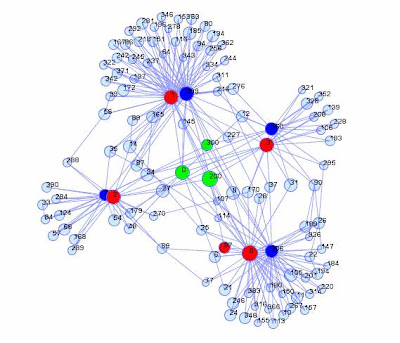
Based on social network theory, these three types of people are what we call social nodes. As shown below, they form the basis of linkages between different groups of people and organisations, facilitating the spread of information and ideas that has allowed tremendous progress to be made in various fields and our way of life.
 So where does this bring us?
Moving beyond the context of starting a social epidemic, how about recruiting or identifying such people in any organisation, and allocating them to a role that best brings out their gifts that will benefit the organisation?
Most of the time, we fail to appreciate such people for their gifts, or underestimate the immeasurable importance of their roles within the organisation.
Two years ago, I made the case that every EB team in AIESEC should at least include someone with the inside knowledge of how the school functions, who knows the right people from the various school offices or student groups, and takes an added interest in how things function beyond their AIESEC community. It will be a bonus to have an expert networker who knows people from different social and professional circles.
They have the potential ability to link their AIESEC community up with so many possible partnerships, people and resources in their own backyard. By virtue of their exposure to different circles and ways of doing things, they also bring a fresh perspective and approach to the organisation.
But yet, we discourage our members from joining other CCAs or take up other commitments beyond AIESEC, nor do we actively nurture such people to take up leadership positions within AIESEC. Worse still, we let these people leave the organisation by flawed member retention strategies.
I do hope that we can one day conduct some social audit of the organisation to identify such people, and bring them into the fold from the peripheral. It's truly a waste of their talent and unique social roles if they are not properly utilised.
I was particularly interested in the Law of the Few which hypothesizes that the success of any social epidemic depends on the involvement of people with a very specific and rare set of social skills.
The Connector has the extraordinary gift of knowing people and acquaintances. They are expert networkers and are often involved in many social and professional circles by virtue of their love to know people. As such, they have the ability to connect different circles of people together.
My BSM Prof, Dr Yeoh, is an example of a Connector. She has this unparalleled ability to network with people from all types of sectors - academia, entrepreneurial startups, government, real estate, banking, consulting, healthcare, fashion etc. - and make an unforgettable impression with them. The fact that we are already into the 7th round of the BSM Middle East (SMU's longest running BSM programme) since 2006, and benefitting from the contacts, discounts and offers of assistance (even during a recession) shows the relational power she has with the Arabs (who are very relational people) and our BSM partners. Indeed, her name has become synonymous with the BSM programme and it is impossible to imagine if the BSM Middle East programme will be possible without her.
The Maven are information brokers who are experts in a particular field or market, not by virtue of their work, but by their passion. They desire to pass on what they know to others out of a genuine want to help others.
My friend, Nathaniel, is a politics Maven. He's the go-to-guy if you need the latest updates on politics in Singapore, and he will gladly spend the afternoon with you just to persuade you to get involved with politics. He's the guy who asks the longest questions at forums - with a prepared sheet of questions (along with facts and data from his pre-forum research), and spams his friends with news updates on politics or to get them to sign-up for related events.
The Salesmen are charismatic people with powerful negotiation and sales skills. If there's anyone who can sell ice to eskimos, it's them - people with the gift of the gap and the ability to make people agree with them.
They remind me of two guys from the SMU Broadcast & Entertainment - Ben and Terence. They are the typical guys you need on your team if you want to make a sales presentation or craft a sales pitch. They have the uncanny ability to communicate their point across and make you want to agree with them without making you feel wrong (or dumb). These are the guys who have already anticipated your question and doubts during the Q&A, and have already prepared three possible answers to any question.
Based on social network theory, these three types of people are what we call social nodes. As shown below, they form the basis of linkages between different groups of people and organisations, facilitating the spread of information and ideas that has allowed tremendous progress to be made in various fields and our way of life.
 So where does this bring us?
Moving beyond the context of starting a social epidemic, how about recruiting or identifying such people in any organisation, and allocating them to a role that best brings out their gifts that will benefit the organisation?
Most of the time, we fail to appreciate such people for their gifts, or underestimate the immeasurable importance of their roles within the organisation.
Two years ago, I made the case that every EB team in AIESEC should at least include someone with the inside knowledge of how the school functions, who knows the right people from the various school offices or student groups, and takes an added interest in how things function beyond their AIESEC community. It will be a bonus to have an expert networker who knows people from different social and professional circles.
They have the potential ability to link their AIESEC community up with so many possible partnerships, people and resources in their own backyard. By virtue of their exposure to different circles and ways of doing things, they also bring a fresh perspective and approach to the organisation.
But yet, we discourage our members from joining other CCAs or take up other commitments beyond AIESEC, nor do we actively nurture such people to take up leadership positions within AIESEC. Worse still, we let these people leave the organisation by flawed member retention strategies.
I do hope that we can one day conduct some social audit of the organisation to identify such people, and bring them into the fold from the peripheral. It's truly a waste of their talent and unique social roles if they are not properly utilised.
Saturday, October 10, 2009
"Conversations That Matter"
I was having supper with Nathaniel one night and knowing that he used to serve on the Student Associations Council (SAC), I began to enquire about his views on the recent SA elections and fiascos. Being a Workers' Party member, he also shared with me his take on local politics and why Singaporeans are so afraid of being associated with the political opposition.
That's when an idea struck me.
There are so many people out there with vast experience, great ideas, and expounding visions that are both challenging and admirable. When I made a mental calculation of the number of forums and talks I attend, and the number of personalities I come into contact with, I realised there is a wealth of knowledge over there that can be tapped upon.
Imagine if there is a platform where conversations with such personalities can be freely published. Through a format of inquiry (i.e. kind of similar to the YEP Social Enquiry methodology of facilitation and reflection), there is much to be taken out of such conversations.
Imagine if there is a platform which the youth or the public can access to get insights into how such personalities think, act and feel, and walk away feeling somehow inspired by their work, ideas or vision. Or just a platform where one can air his views freely in support or rebuttal of these personalities. It's all about bridging the chasm between the public and such personalities.

"Conversations That Matter" will have no preference for individuals from any sectors, industry or school of thought. I believe political, business or social leaders all have one thing in common: that they believe in a vision greater than themselves that will benefit their community, and perhaps beyond.
I then made a mental list of people whom we could engage as writers and publishers for this platform. Nathaniel even suggested we could start off as an online blog\website, generate income from ads, then sell the rights to a media outlet with the promise that the platform will retain its accessibility and unbias for readers. Or we could brand it as an SMU publishing project which will be non-profit and run entirely by student volunteers.
Or we could simply shelf the idea and revisit it at a later date because it is so convenient to do so.
I need discipline, time and resources to make this happen!
That's when an idea struck me.
There are so many people out there with vast experience, great ideas, and expounding visions that are both challenging and admirable. When I made a mental calculation of the number of forums and talks I attend, and the number of personalities I come into contact with, I realised there is a wealth of knowledge over there that can be tapped upon.
Imagine if there is a platform where conversations with such personalities can be freely published. Through a format of inquiry (i.e. kind of similar to the YEP Social Enquiry methodology of facilitation and reflection), there is much to be taken out of such conversations.
Imagine if there is a platform which the youth or the public can access to get insights into how such personalities think, act and feel, and walk away feeling somehow inspired by their work, ideas or vision. Or just a platform where one can air his views freely in support or rebuttal of these personalities. It's all about bridging the chasm between the public and such personalities.

I then made a mental list of people whom we could engage as writers and publishers for this platform. Nathaniel even suggested we could start off as an online blog\website, generate income from ads, then sell the rights to a media outlet with the promise that the platform will retain its accessibility and unbias for readers. Or we could brand it as an SMU publishing project which will be non-profit and run entirely by student volunteers.
Or we could simply shelf the idea and revisit it at a later date because it is so convenient to do so.
I need discipline, time and resources to make this happen!
Sunday, January 18, 2009
The Satyam scandal: Who's truly at fault?
The Satyam scandal has particularly caught my attention for 3 main reasons.
Firstly, I previously interned at the Byrraju Foundation, an NGO started by Ramalinga Raju, the disgraced Director of Satyam Computers, who is also a well-known philanthropist. Even though the NGO operates as a separate entity from Satyam and its subsidiaries, the staff at the Foundation talk about the Raju family with great awe and respect. There is immense pride in working for a Foundation bearing the Raju family's legacy, and at the same time following the time-honoured tradition of giving back to the community.
As the recruitment for new interns to work at the Foundation steps up in SMU, I often wonder how different an atmosphere they will encounter at the Foundation.
Secondly, this is the most significant scandal to come out of corporate India in many years (probably the first?). Until recently, Indian companies have never generated the same controversy as their US, Chinese and European counterparts. Instead, they have built up a steady reputation for diligence, excellence, value-for-money, and of course corporate responsibility.
From a PR perspective, the Satyam scandal threw all of that out of the window because Satyam was often seen as a corporate leader, a first-mover whom others followed, and ironically, they were seen as a role model in corporate governance. Now, there is rife talk that the scandal will not just force current and potential customers around the world to think twice before they outsource to Indian BPOs, but also affect the rest of corporate India.
With this, coupled with the current economic crisis that is affecting the real economy and even eating into the low-cost companies' bottemlines, how will the world and corporate India respond? This is a trend to watch in 2009.
Thirdly, this episode has come at a bad timing for global philanthrophy. The Madoff scandal in the US has shown us that even big-name philanthropists like Bernard Madoff are still susceptible to greed and not everything may be as rosy as it seems beyond the smiling faces and the feel-good image that philanthropists often portray when they talk of giving their wealth back to society.
But while it is easy for the media to portray these philanthropists as villains who have sucked investors of their money, are we overstepping the gun by doing so? An email from a friend who used to work at Satyam offers a different perspective on this issue:
------------------------------------------------------------------------------------------------------------
So while Ramalinga Raju will have his more than fair share of the blame, let's not make him a scapegoat for the inadequacies of the Indian regulators and auditors in doing their job properly.
Firstly, I previously interned at the Byrraju Foundation, an NGO started by Ramalinga Raju, the disgraced Director of Satyam Computers, who is also a well-known philanthropist. Even though the NGO operates as a separate entity from Satyam and its subsidiaries, the staff at the Foundation talk about the Raju family with great awe and respect. There is immense pride in working for a Foundation bearing the Raju family's legacy, and at the same time following the time-honoured tradition of giving back to the community.
As the recruitment for new interns to work at the Foundation steps up in SMU, I often wonder how different an atmosphere they will encounter at the Foundation.
Secondly, this is the most significant scandal to come out of corporate India in many years (probably the first?). Until recently, Indian companies have never generated the same controversy as their US, Chinese and European counterparts. Instead, they have built up a steady reputation for diligence, excellence, value-for-money, and of course corporate responsibility.
From a PR perspective, the Satyam scandal threw all of that out of the window because Satyam was often seen as a corporate leader, a first-mover whom others followed, and ironically, they were seen as a role model in corporate governance. Now, there is rife talk that the scandal will not just force current and potential customers around the world to think twice before they outsource to Indian BPOs, but also affect the rest of corporate India.
With this, coupled with the current economic crisis that is affecting the real economy and even eating into the low-cost companies' bottemlines, how will the world and corporate India respond? This is a trend to watch in 2009.
Thirdly, this episode has come at a bad timing for global philanthrophy. The Madoff scandal in the US has shown us that even big-name philanthropists like Bernard Madoff are still susceptible to greed and not everything may be as rosy as it seems beyond the smiling faces and the feel-good image that philanthropists often portray when they talk of giving their wealth back to society.
But while it is easy for the media to portray these philanthropists as villains who have sucked investors of their money, are we overstepping the gun by doing so? An email from a friend who used to work at Satyam offers a different perspective on this issue:
------------------------------------------------------------------------------------------------------------
Dear all of my Satyam Friends,
Yesterday will be a memorable day to us throughout our life. Little bit of business & human nature knowledge is forcing me to write few of my thoughts (Please ignore them if they doesn’t make any sense). Ask yourself who is worst affected by all this mayhem. Is it u & me (employees), Govt or Satyam & Ramalingaraju ?. My conviction says that employees of any MNC are associated to that company as long as they don’t have any better option, the best thing government can do for a company is to keep itself away from it. But there was a visionary who created wealth for a nation for 20 years, the only thing that cannot be separated from satyam for these 20 years & ahead also if satyam remains was\is a name called “Ramalinga Raju”.
Fortunately I got some 15 min of time talking to him when i was an ELTP. He’s much softer then we see him. Imagine what would be going on in his mind when he was writing yesterday’s letter accepting all the things which he did only to save his company. All have made him scapegoat for what has happened & left the company keeping their integrity intact. He was cursed badly for putting the money of a public limited company into his family driven company but it only now clear that how he was transferrring the risk from 50,000 people to his two sons & his known-integrity.
The worst which can happen to we the employees is that we are out of our current job, jobless for time being & then again getting a job which we deserve & our families will be worried for us(as they are always). But a relatively bitter truth will be for the Raju-family who will be annoyed for ages & will be treated as miscreants by those who do not know the truth or more about Greedy investors & money market. And the truth is that he has not stolen some thousand crores rupees into his own pocket, it was a bubble he created which busted. (And every other company on earth does so, being wary of not getting trapped)
One more thing which annoys me is does a philanthropist guy deserve this disgraceful exit ? I really feel sad about the way he’s been portrait in the media. Our rustic fellows have already started comparing him with Harshad Mehta. Tell me any incident in corporate India where any chairman has dared to confess such irregularities in his own firm. And believe me it takes hell lot of guts to accept all this publicly. And as I read the news today morning it was published there that even his community members have suggested him not to tell anything and later on he can play with the Indian laws as every politician does in India. But as he mentioned it was all deep regret in his conscience which lead him to confess all this.
-----------------------------------------------------------------------------
So while Ramalinga Raju will have his more than fair share of the blame, let's not make him a scapegoat for the inadequacies of the Indian regulators and auditors in doing their job properly.
Subscribe to:
Posts (Atom)
